10 Essential Desk Stretches Tips to Stay Healthy at a Sedentary Job
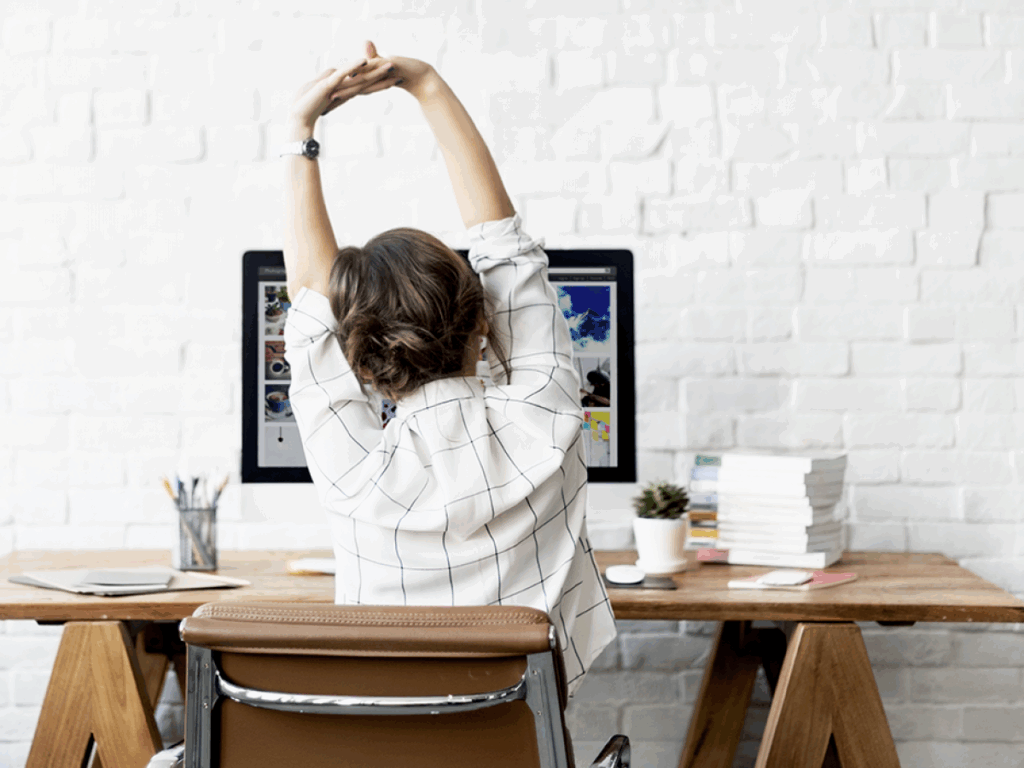
Spending long hours at a desk can take a serious toll on your body. We’ve all experienced stiff shoulders, tight hips, and achy backs as we plug away on our computers. It’s no wonder that after 8 hours of restricted desk posture, it feels like every muscle is tight, and your neck may never return to neutral. The good news? You don’t need to spend hours at the gym each week to help combat this discomfort and can keep your body feeling good throughout your workday with some great desk stretches.
In this post, we’ll dive into 10 essential desk stretches and movement tips designed specifically to help people like you with sedentary jobs. These quick exercises will help get you moving, whether it’s between phone calls and emails or while taking your lunch break. At home and in the office, these exercises will get the blood flowing, improve posture, and reduce tension, all without leaving the workspace.
Let’s get moving!
Desk Stretching Overview
You don’t need a yoga studio or even much space to start stretching at your desk. Whether it’s working from home at your kitchen table or in a busy office, these 10 essential desk stretches are simple, discreet, and adaptable. Best of all, they only take a few minutes at a time. Think of them as small intentional breaks to help counteract hours of sitting. All without disrupting your workflow or drawing curious stares from your nosy coworkers. A little consistency goes a long way, and just 1-2 minutes every hour can make a huge difference.
The following 10 stretches and movement tips include a mix of seated and standing options and require little to no equipment. Just everyday items like a doorway, a sturdy chair, or a lacrosse ball. Each movement is adaptable to your space and comfort level, and as always, listen to your body. If anything feels painful or uncomfortable, skip it or modify as needed.
Top 10 Desk Stretches and Movement Tips
Upper Body:
1. Doorway Pec Desk Stretch
This exercise targets the pectoralis major and minor muscles. These muscles often tighten from sitting and typing for hours. When tight, they pull your shoulders forward and up, which can lead to poor posture and neck pain. This exercise can be done as often or a little as you would like.
Instructions:
- Stand in a doorway with your forearm on the side of the doorway.
- Move forward with one leg in front of the other to stretch the pectorals.
- Pinch your shoulder blades together and prevent your lower back from arching.
- You should feel a comfortable stretch in your chest.
- Hold for 20-30 seconds.
- You can perform the stretch with your arm up or down to emphasize different portions of your pectorals.
- Repeat as needed.
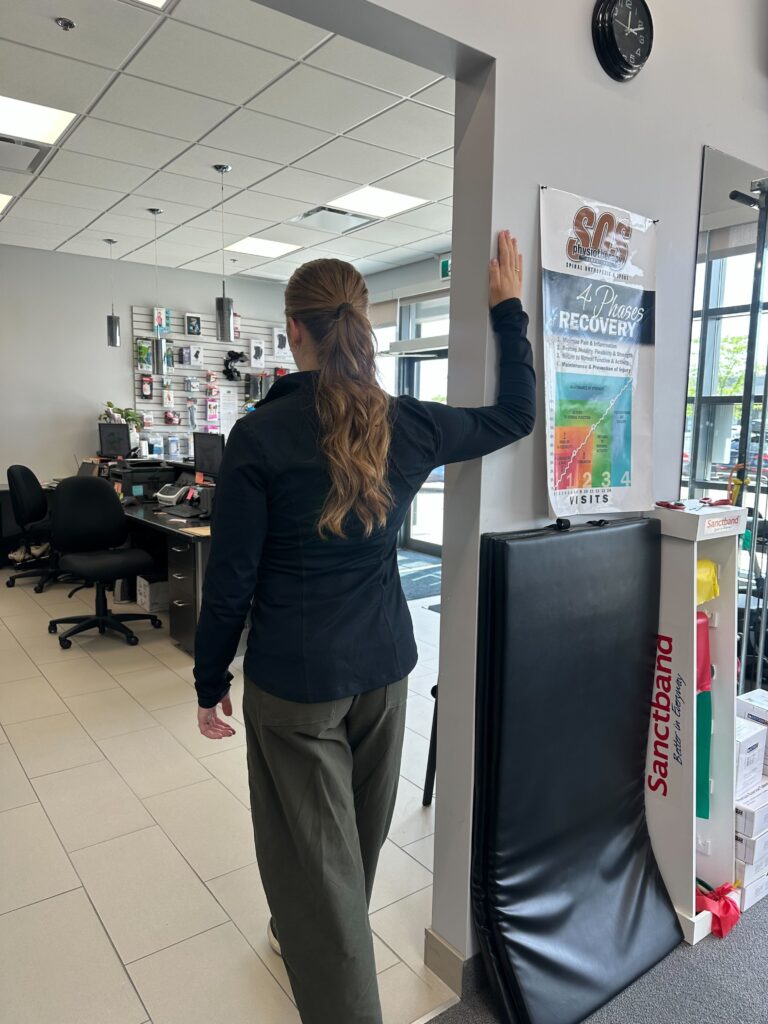
2. Brugger Desk Stretch
This exercise is used to stretch out the chest and strengthen the back muscles to work on posture. Our posture can often become compressed when we find ourselves sitting at a desk all day. Use this amazing exercise to alleviate some of that pressure throughout the day.
Instructions:
- Stand up with your arms relaxed at your side.
- Rotate your arms so your thumbs are pointing backward to open the chest.
- Squeeze the shoulder blades together, keep your chin tucked.
- Hold for 1-2 seconds before releasing the tension.
- Repeat for 8-10 reps or as needed.
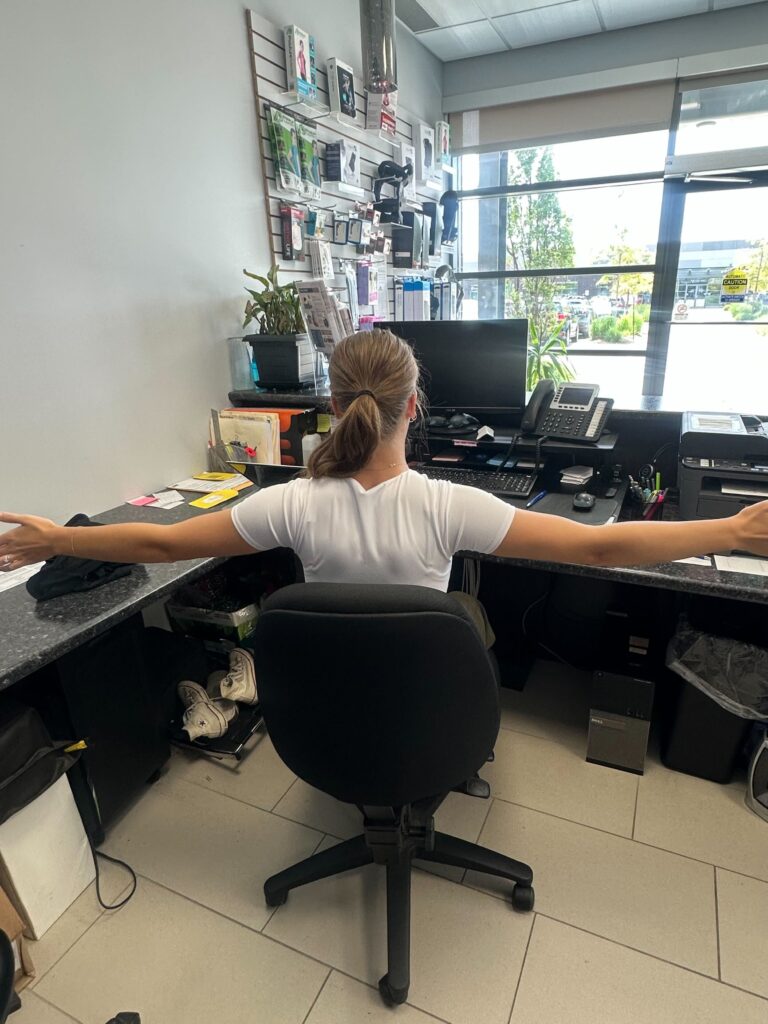
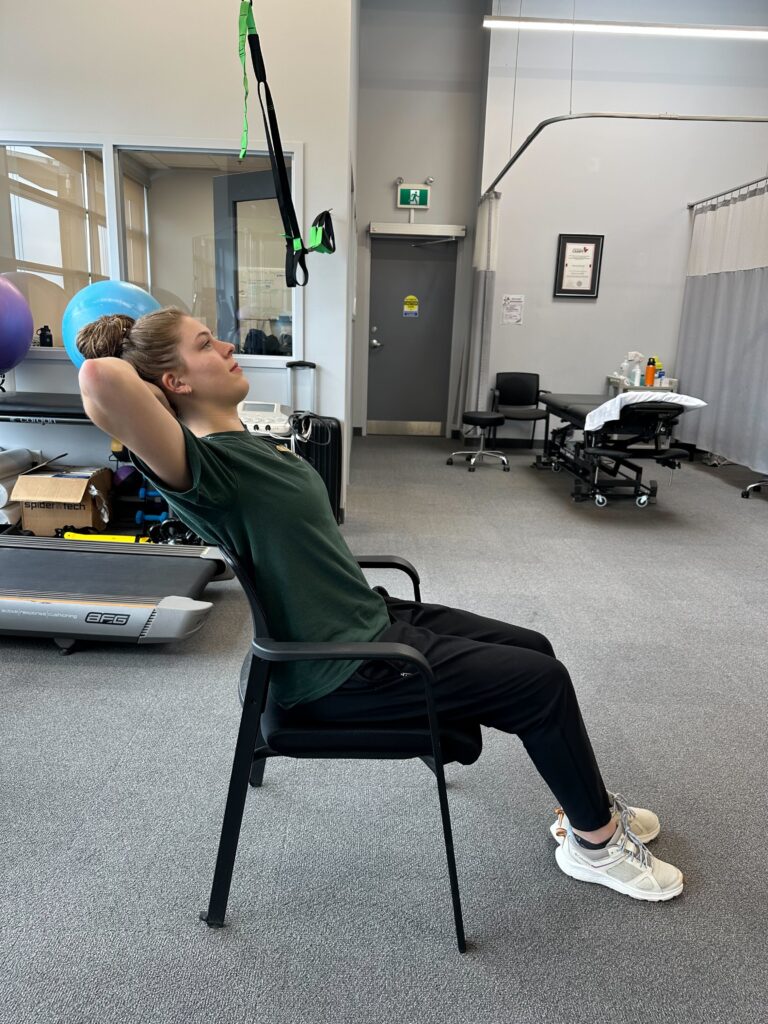
3. T-Spine Extension Desk Stretch
This desk stretch is used to help release tension in the middle or thoracic portion of your spine. Throughout your work day, you may find yourself hunching over or in an awkward position that puts extra stress on your spine. This key exercise can offer some relief to those tight muscles over time.
Instructions:
- Sit all the way back in a chair so that your back is leaning on the backrest.
- Cross your hands on your chest.
- Extend the thoracic spine over the chair and then come back to the starting position.
- Repeat as needed.
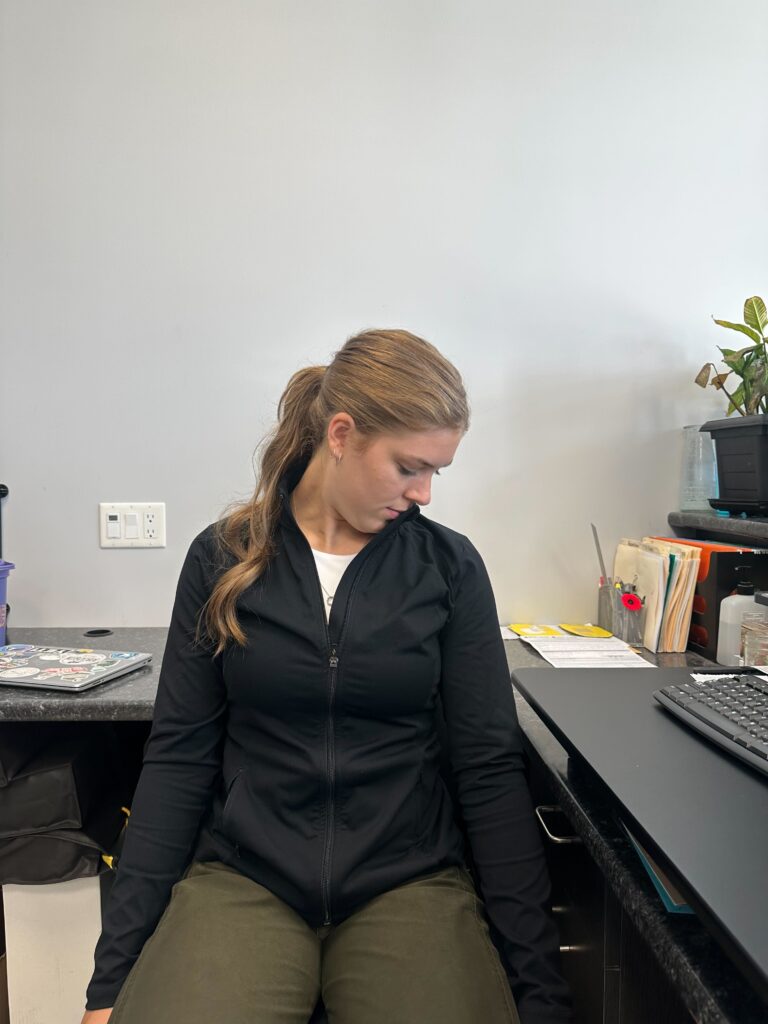
4. Levator Scapula Desk Stretch
This easy exercise is used to lengthen and stretch your levator scapula muscles. These muscles attach the shoulder blade to the cervical spine near the base of the neck. As your workday progresses, these muscles become rigid and tight after being in an uncomfortable position. This exercise helps give those muscles a rest and relaxes the neck.
Instructions:
- Sit tall on a straight chair.
- Grab the bottom of the seat with your hand on the side you are hoping to stretch to lower the shoulder by pulling down.
- Tilt and turn your head to the opposite side.
- Nod head forward until a stretch is felt along the side and back of the neck.
- Apply extra pressure (gently) with your hand to increase the stretch if needed.
- Hold the stretch and relax for 15-30 seconds
- Switch sides and repeat as needed.
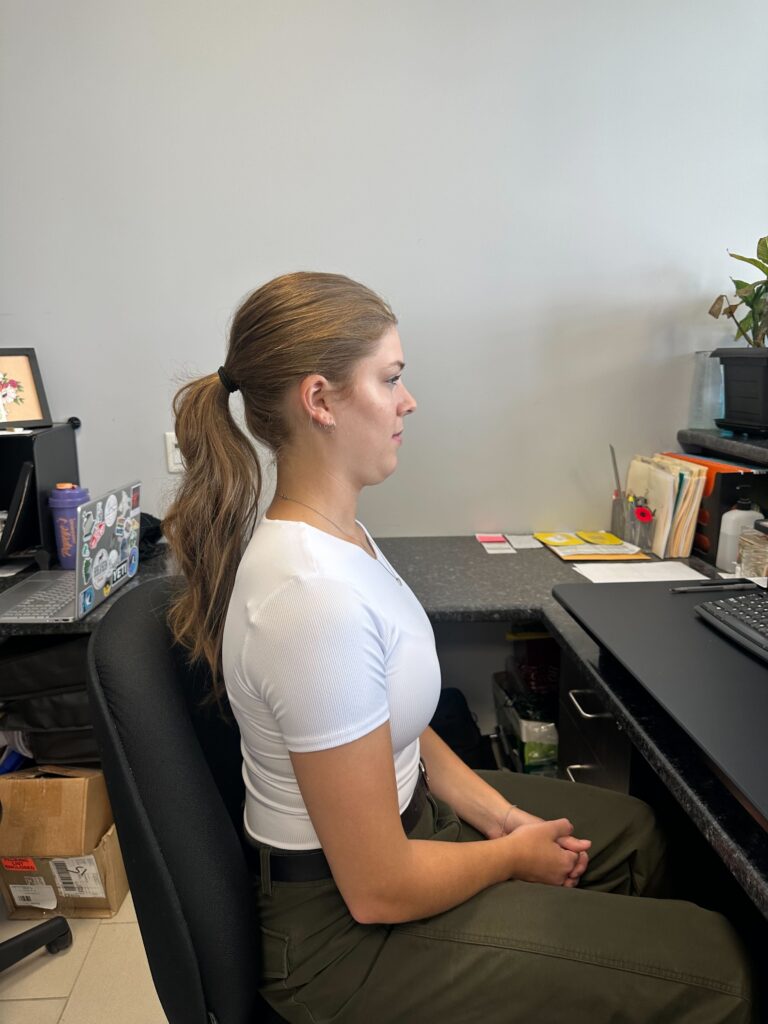
5. Chin Tucks
This exercise is a key movement used to help relax and stretch the muscles at the base of the skull. After sitting in a forward head position all day, it is important to bring the spine and muscles back to a neutral position. We want to stretch and strengthen these muscles to reduce tension and headaches throughout the day.
Instructions:
- Sit up straight in a chair and look directly ahead of you.
- Tuck your chin in without tilting your head down.
- Hold for 5 seconds.
- Return your head to the original position.
- Repeat for 8-10 reps or as needed.
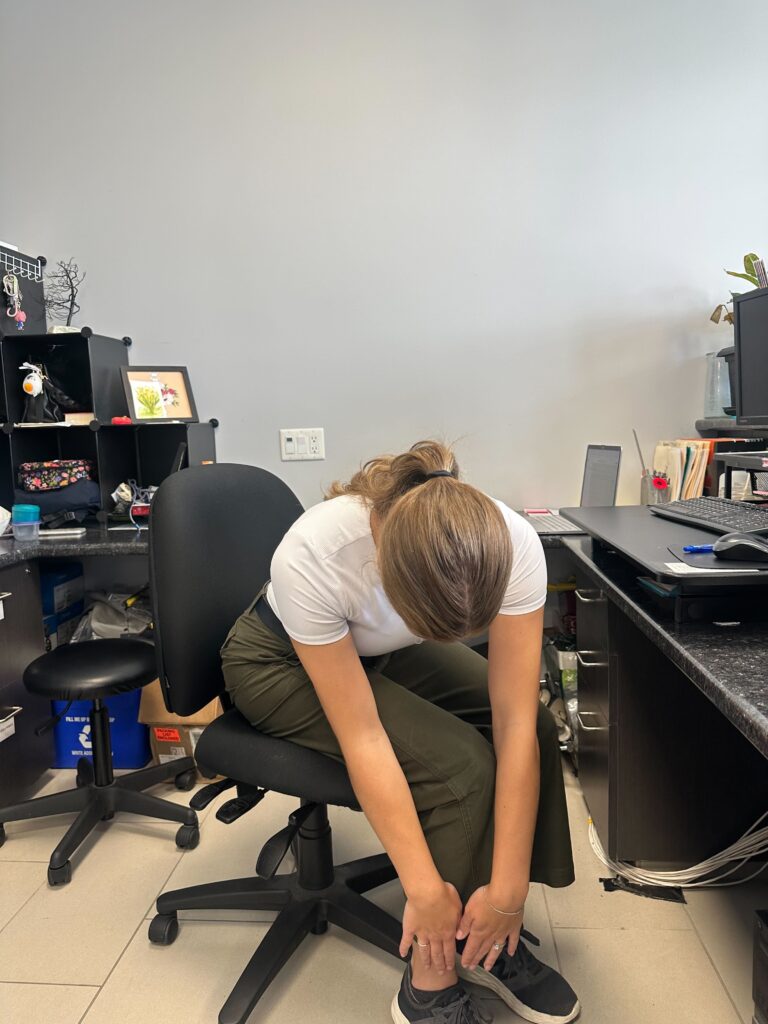
6. Flexion Rotation Slide Desk Stretch
This exercise can help reduce strain and tension in the lower (lumbar) spine. Sitting at a desk all day can result in an exaggerated curve in the lumbar spine, leading to pain and tightness in the lower back. The best way to release this tension is to stretch out the area.
Instructions:
- Sit in a chair with your feet firmly on the ground.
- Rest your hands on the front of your knees.
- Slowly bend forward and reach for one foot with both hands.
- Hold for 15-30 seconds.
- Slowly return to the upright position.
- Switch sides and repeat as needed.
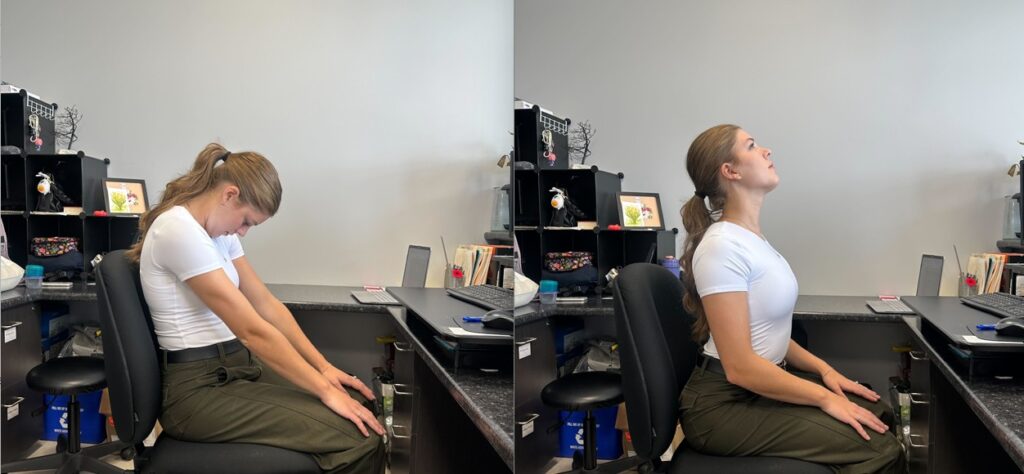
7. Seated Cat Camel
This exercise is a common yoga pose that offers a two-in-one stretch. Both the lower (lumbar) and upper (thoracic and cervical) spine needs stretching throughout the day. As your day goes on, more and more pressure compresses into the spine, creating pain, tension, and tight muscles.
Instructions:
- Sit up nice and tall in your chair with your back away from the backrest and place your hands on your knees.
- Bring your chin down to your chest and slowly round out your back until you feel a gentle pull in your back.
- Hold for 5 seconds, then slowly arch your back until you feel a gentle pull in your stomach or until you feel a slight tension in your lower back.
- Alternate between these 2 positions.
- Repeat as needed.
Lower Body:
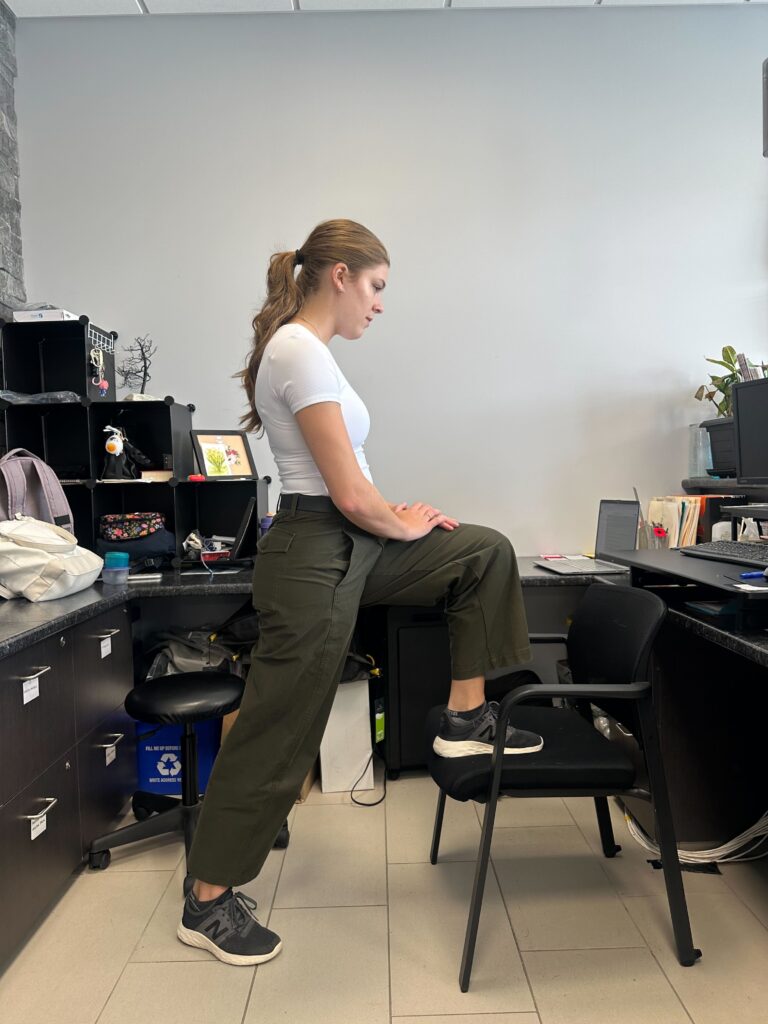
8. Hip Flexor Stretch
After sitting all day in a flexed position, your hip flexors are crying out to be stretched and moved. This stretch can help reduce tension and tightness in the lower body and keep you moving throughout the day.
Instructions:
Important note: Make sure chairs with wheels are locked so the chair remains stationary for the duration of the exercise.
- Stand in front of a chair and place one foot on the chair.
- Bring your weight forward as you bend your hip as far as you can.
- You should feel the stretch on the front side of the leg planted on the floor.
- Maintain the stretch for 15-30 seconds and return to the initial position.
- Switch sides and repeat as needed.
9. 90/90 Seated Glute Stretch
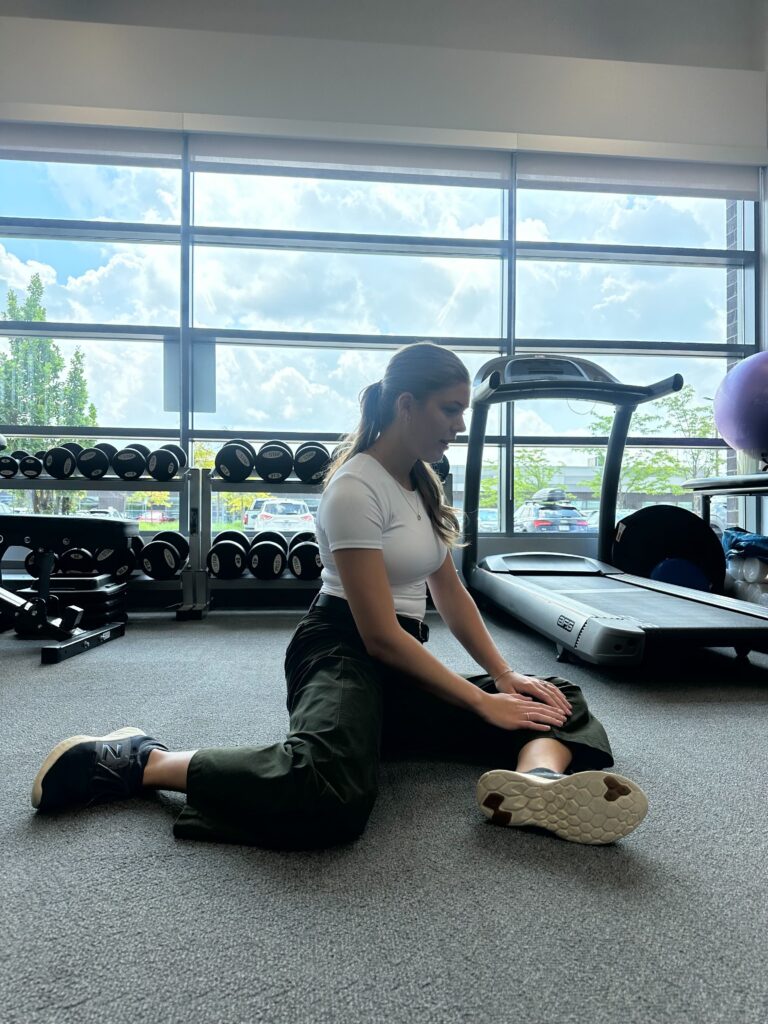
This easy exercise is perfect to help stretch out any tight muscles in the glutes or hamstrings after a long day’s work at the desk. These muscles are continuously stressed and tensed throughout the day. They need all the help they can get to calm down and release tension.
Instructions:
- Start on your buttocks with your feet flat on the floor, beyond hip-width distance. Your arms should be behind you, on the floor.
- Let your knees drop to one side until they reach the floor. Your knees should be bent at 90°.
- Then, rotate the legs to bring the knees to the other side.
- Repeat as needed.
10. Foot Rolls with Lacrosse Ball
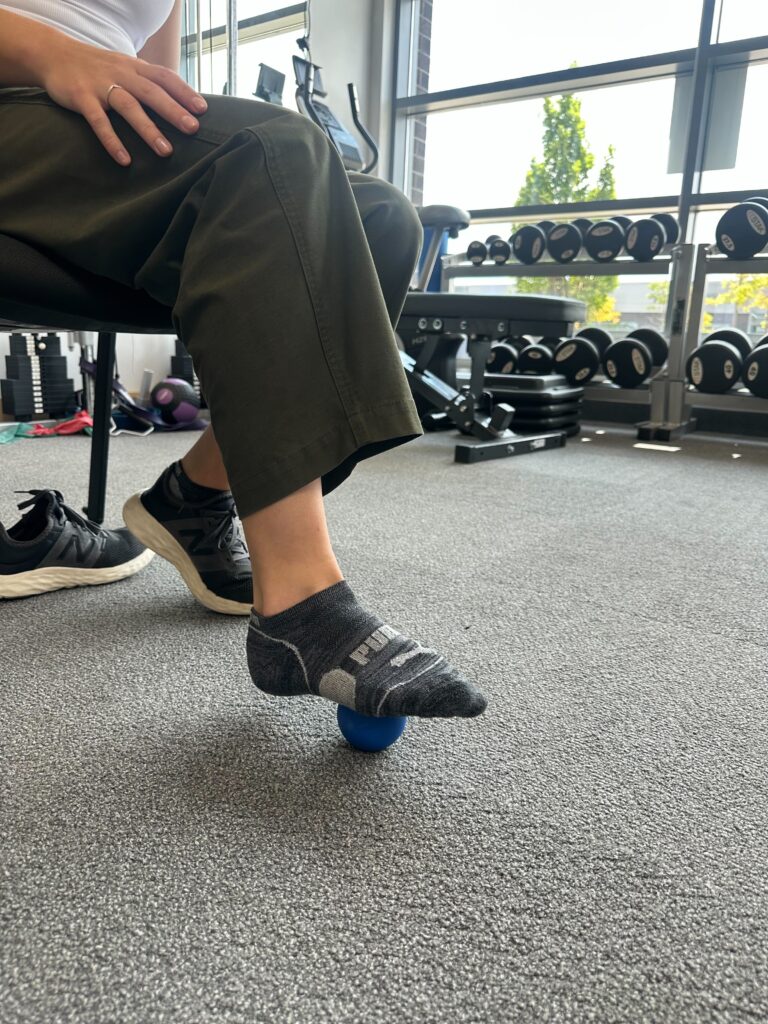
This exercise is used to help relieve tension buildup in the ankles and feet after sitting all day. Even though you may not be on your feet all day, these muscles can still become tight and sore from being unused. This exercise requires little to no effort and can be done while you continue working. All you need is a tough, round, small ball, the size of a tennis or lacrosse ball, and you’re ready to get rolling.
Instructions:
- Stand next to a chair, wall, or stable object for balance. (This can also be done sitting)
- Step over a ball with one foot.
- Roll the ball under your foot front-to-back to release the plantar fascia.
- Switch feet and repeat as needed.
The Bottom Line:
Taking a few minutes each day to stretch can make a huge difference in how your body feels and functions, especially if you spend most of your day sitting at a desk. These 10 essential stretches are simple, quick, and designed to target the areas most affected by prolonged sitting, like your shoulders, neck, hips, and lower back.
Making stretching a consistent part of your work routine can help you maintain better posture, reduce muscle stiffness, improve circulation, and even boost your focus and energy. It’s not about doing a perfect routine; it’s about creating small, sustainable habits that keep your body moving and prevent issues before they start.
Remember, your body wasn’t designed to stay in one position all day. Movement is medicine! The more often you give your body a chance to reset, the better you’ll feel both physically and mentally.
If you’re experiencing ongoing discomfort or if you’re not sure which movements are right for you, professional support can make a world of difference.
How West End Physiotherapy can help YOU!
At West End Physiotherapy, we understand how sitting at a desk all day affects your body. It doesn’t just cause stiffness; it can lead to long-term muscle imbalances, joint pain, and poor posture that drain your energy and affect your daily life. That’s why we help desk workers uncover the root causes of their discomfort and build personalized plans to restore mobility and prevent injury.
Our experienced physiotherapists use hands-on treatment, guided stretching, ergonomic assessments, and posture correction strategies to help you move better and feel stronger. Whether you’re dealing with a sore neck, tight shoulders, or lower back pain, we create sustainable solutions that fit into your routine and support long-term health.
We don’t wait for small aches to become bigger problems, and you shouldn’t either. Reach out to West End Physiotherapy and take the first step toward staying healthy, mobile, and pain-free. No matter how long your workday lasts.