
5 Most Common Volleyball Injuries & How Physiotherapy Helps
Fast, Dynamic, and Demanding: Why Volleyball Players Get Injured
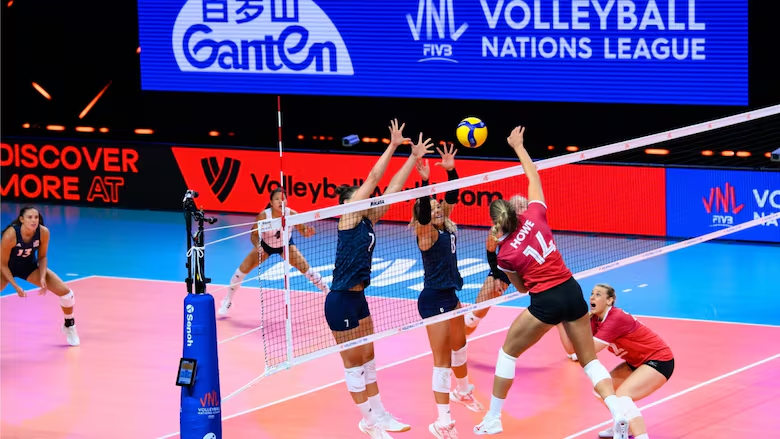
Volleyball is a fast-paced, explosive, and dynamic sport. Athletes jump, dive, block, and change directions quickly, thus putting significant stress on the body. These demands can create vulnerability to injuries due to sudden impact and overuse. Some of the most common injuries include lateral ankle sprains, patellar tendinopathy, shoulder impingement or rotator cuff overload, finger sprains and dislocations, and low back pain. Over time, mild discomfort may develop into more serious injuries that can limit an athlete’s performance and ability to train or compete. This post will highlight these 5 most common injuries and effective ways physiotherapy can help prevent, treat, and get you back on the court.
The Most Common Volleyball Injuries
Lateral Ankle Sprain
What is it?
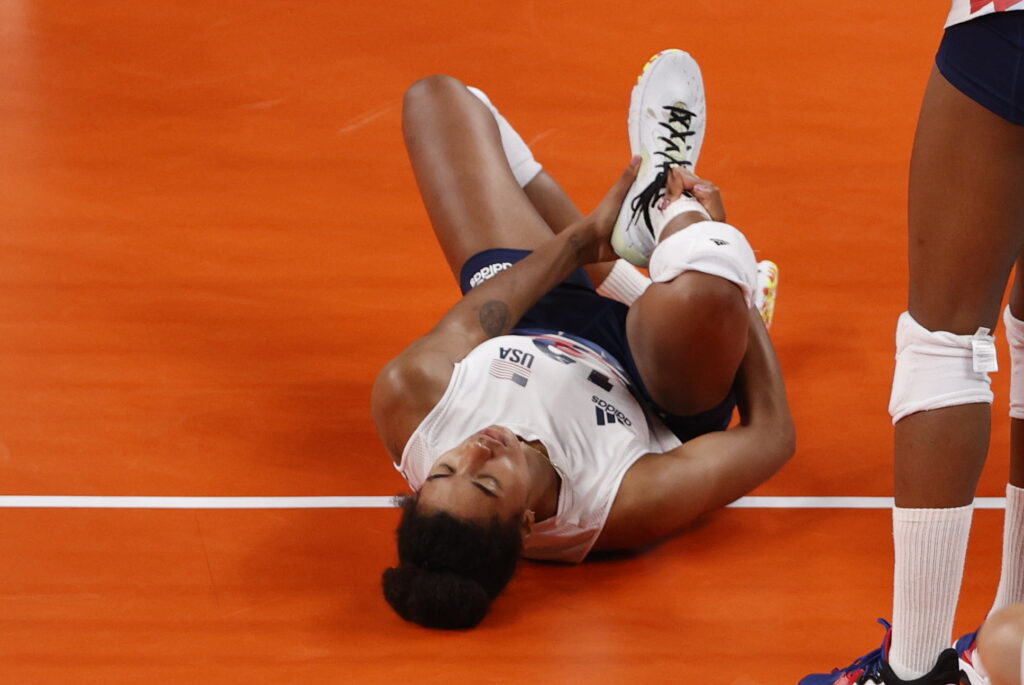
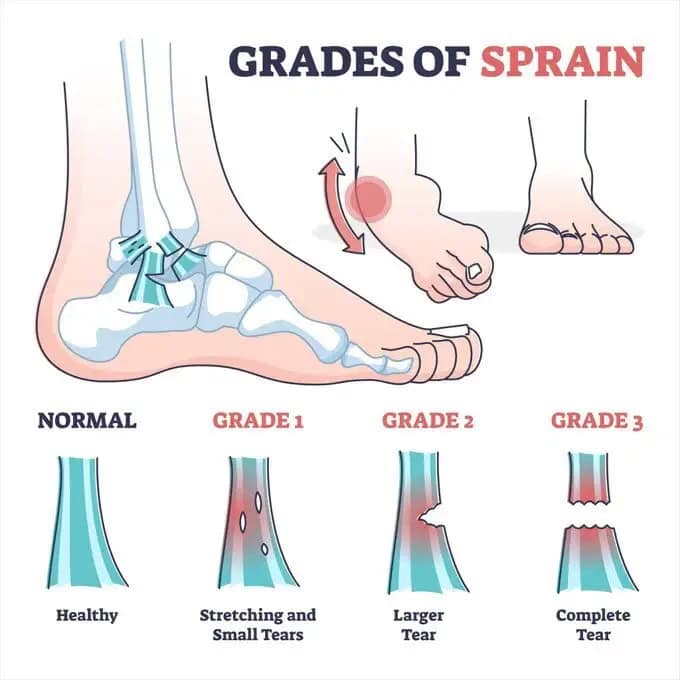
A lateral ankle sprain is one of the most common ankle injuries. It happens when the foot rolls too far inward, stretching or tearing the ligaments on the outside of the ankle. These ligaments help keep the joint stable, but when they overstretch, they can cause pain, swelling, and bruising around the outer ankle.
| Type | Ligament Damage | Symptoms | Stability | Recovery Time |
| Grade 1 | Slight stretching or small tears of the ligament | Mild pain and swelling | Stable | 1-3 weeks |
| Grade 2 | Partial tear of ligament | Moderate pain, swelling, and bruising | Some instability | 3-6 weeks |
| Grade 3 | Complete tear of one or more ligaments | Severe pain, major swelling and bruising | Very unstable | 8-12+ weeks |
How is it caused in volleyball?
In volleyball, a lateral ankle sprain often occurs when a player lands awkwardly after jumping—especially when landing on another player’s foot at the net. Quick side-to-side movements, sudden changes in direction, or uneven landings can also twist the ankle inward. As a result, the ligaments stretch beyond their normal range, leading to a sprain.
How can physiotherapy help
Early treatment focuses on reducing pain and swelling with methods like ice, IFC, ultrasound, laser therapy, and heat.
Once pain decreases, physiotherapists use manual techniques such as joint mobilizations, massage, and soft-tissue release to restore movement and reduce stiffness.
As mobility improves, treatment shifts to rehabilitation exercises that build strength, flexibility, and balance—such as range-of-motion work, resistance band strengthening, and balance training.
Finally, the physiotherapist introduces sport-specific drills like controlled jumping, cutting, and landing to prepare the athlete for returning to volleyball and to reduce the risk of future sprains.
Patellar Tendinopathy
What is it?
Patellar tendinopathy, often called jumper’s knee, is an overuse injury that affects the patellar tendon — the band of tissue connecting the kneecap (patella) to the shinbone (tibia). When it becomes overloaded or irritated, small tears can develop in the tendon, leading to pain, stiffness, and reduced strength, especially just below the kneecap.
How is it caused in volleyball?
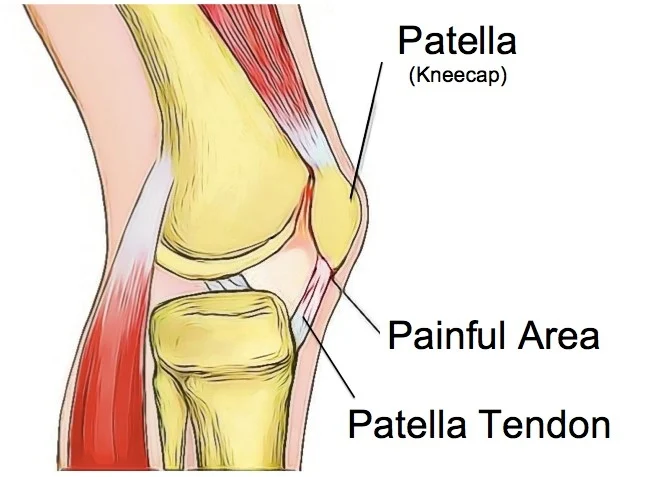
In volleyball, patellar tendinopathy commonly develops from repeated jumping and landing movements. Constant takeoffs and landings place high stress on the patellar tendon, especially during spikes, blocks, and quick direction changes. Poor landing technique, weak quadriceps or glute muscles, and tight lower-limb muscles can increase this strain. Over time, this repetitive stress causes tendon irritation and degeneration rather than a single traumatic injury.
How can physiotherapy help?
Physiotherapy plays a key role in treating patellar tendinopathy by managing pain, restoring strength, and improving knee function. In the early phase, a physiotherapist may use modalities such as ice, interferential current (IFC), ultrasound, and laser therapy to reduce pain and inflammation around the tendon.
Once symptoms begin to settle, manual therapy—including massage, patellar mobilizations, and soft tissue release—helps improve flexibility and promote healing. The next step involves a targeted exercise program that focuses on eccentric and isometric strengthening of the quadriceps and hip/glute activation to correct movement imbalances.
As strength and control improve, the physiotherapist introduces functional and sport-specific drills, such as controlled jumping, landing, and agility exercises. These prepare the athlete to safely return to volleyball while reducing the risk of the injury coming back.
Shoulder Impingement/Rotator Cuff Overload
What is it?
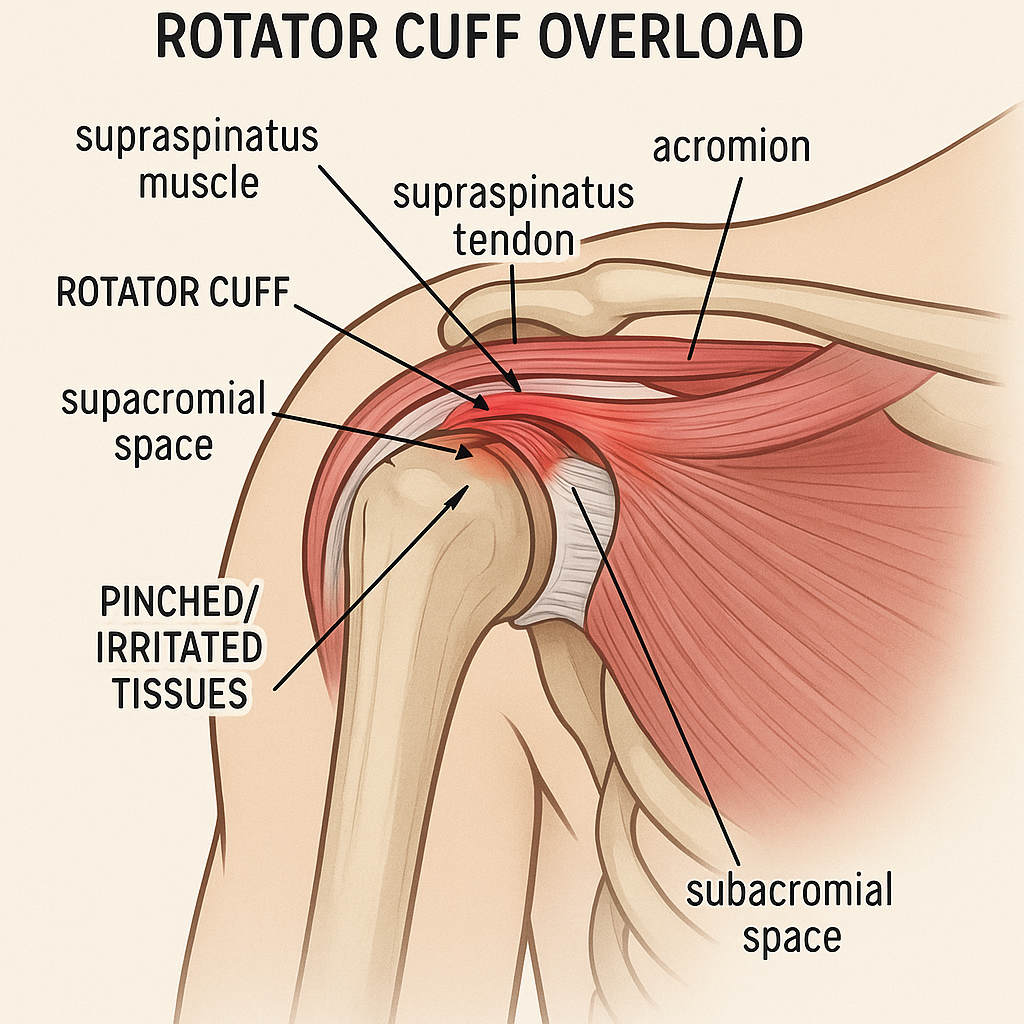
Shoulder impingement and rotator cuff overload are common overuse injuries that affect the muscles and tendons surrounding the shoulder joint. The rotator cuff is a group of four muscles that stabilize the shoulder and help lift and rotate the arm. In shoulder impingement, the tendons of the rotator cuff become pinched or irritated between the bones of the shoulder, leading to pain, inflammation, and sometimes weakness. Over time, repeated stress can cause rotator cuff overload, where the tendons become strained or develop small tears due to excessive use.
How is it caused in volleyball?
These injuries often develop from repetitive overhead movements, such as serving, spiking, and blocking. Each of these actions requires powerful shoulder rotation and elevation, which puts stress on the rotator cuff tendons. Poor technique, weak scapular (shoulder blade) muscles, or limited shoulder mobility can increase the risk. Overtraining or not allowing enough rest between practices can also lead to inflammation and tendon fatigue, eventually resulting in pain at the front or top of the shoulder during hitting or reaching overhead.
How can physiotherapy help?
Physiotherapy will help by easing pain, improving mobility, and restoring strength. Early treatment may include ice, ultrasound, interferential current (IFC), laser, or heat therapy to reduce pain and inflammation.
As recovery progresses, manual therapy—such as massage and joint mobilizations—helps restore movement and relieve tension. The physiotherapist then introduces targeted exercises to strengthen the rotator cuff, shoulder blade, and postural muscles, along with stretching to improve flexibility.
Sport-specific exercises such as controlled overhead movements, serving drills, and proper hitting technique help rebuild strength and prevent re-injury.
Finger Sprains/Dislocations
What is it?
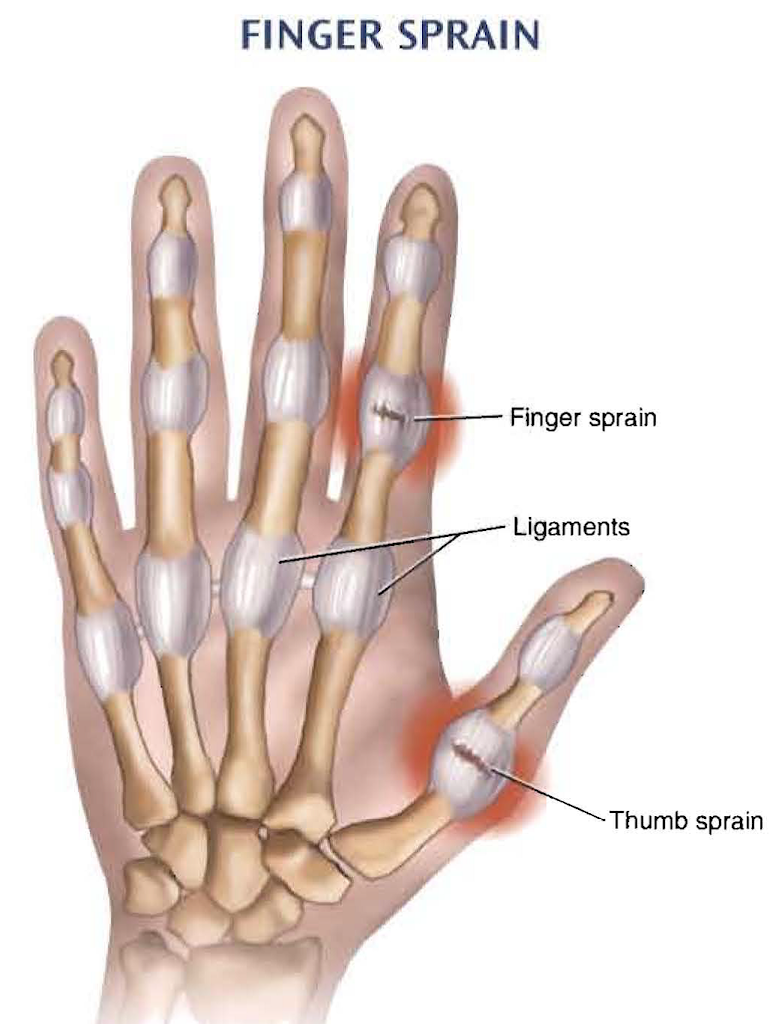
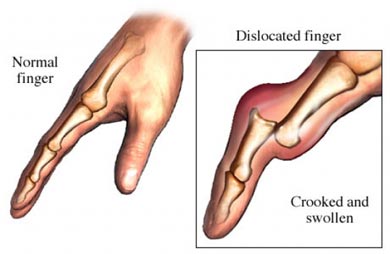
A finger sprain happens when the ligaments that support the finger joints stretch or tear. These ligaments keep the bones stable, so when they’re injured, the finger may swell, bruise, and feel painful or stiff. A finger dislocation is a more severe injury where the bones in the joint move out of place, often causing visible deformity, sharp pain, and loss of movement until the joint is realigned.
How is it caused in volleyball?
In volleyball, finger sprains and dislocations often occur during blocking, setting, or receiving hard spikes. When the ball hits the tip of the finger at an awkward angle, the sudden force can bend the joint too far backward or sideways. This overstretches the ligaments or even pushes the joint out of place. Poor hand positioning, lack of taping or finger support, and fatigue can increase the risk. These injuries are especially common in front-row players who block or set frequently.
How can physiotherapy help?
Physiotherapy helps finger sprains and dislocations by reducing pain, restoring movement, and preventing stiffness. Early treatment may include ice, interferential current (IFC), ultrasound, or laser therapy to control pain and swelling. Once the joint is stable, manual therapy such as gentle mobilizations and massage improves flexibility and circulation. The physiotherapist then adds range of motion and strengthening exercises using grip tools or bands to rebuild strength and coordination.
As recovery progresses, physiotherapists introduce sport-specific drills to prepare athletes for returning to volleyball. These include ball tapping drills, setting progressions, blocking simulations, and grip training with stress balls or therapy putty. Physiotherapists may protective taping techniques to support the fingers during play. Together, these treatments help restore strength, control, and confidence while reducing the risk of re-injury.
Low Back Pain / Pars stress
What is it?
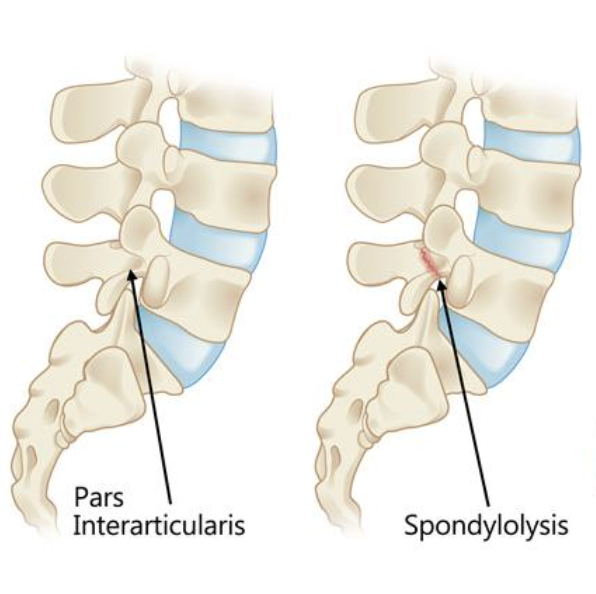
Low back pain is a common issue among volleyball players, often linked to overuse or repetitive strain on the lower spine. One specific cause is a pars stress injury (also called spondylolysis), which involves a small stress fracture in the pars interarticularis—a thin section of bone that connects parts of a vertebra. This injury develops gradually from repeated extension and twisting of the lower back, rather than from a single traumatic event.
How is it caused in volleyall?
In volleyball, pars stress injuries often develop from repeated hyperextension and rotation of the spine during serving, spiking, or back bending in setting and blocking. Constant jumping and landing also add pressure to the lower back. Weak core muscles, limited hip mobility, and poor technique—especially during powerful overhead movements—further increase strain on the spine. Over time, this repeated stress can cause irritation or small fractures in the vertebrae, leading to ongoing low back pain that worsens with activity.
How can physiotherapy help?
Physiotherapy plays a key role in treating low back pain and pars stress injuries by easing pain, restoring movement, and building long-term strength and stability.
At the start of treatment, a physiotherapist may use ice, heat, interferential current (IFC), ultrasound, or laser therapy to reduce pain and inflammation. Once symptoms begin to settle, manual therapy techniques—such as soft tissue release and gentle spinal mobilizations—help improve flexibility and relieve muscle tension.
Rehabilitation then focuses on core strengthening and stability exercises to support the spine, along with hip mobility and flexibility training to reduce excess strain on the lower back. As strength and control improve, the physiotherapist introduces sport-specific drills that emphasize proper jumping, landing, and serving mechanics. These progressions help athletes return to volleyball safely and minimize the risk of re-injury.
How West End Physiotherapy Can Help You
At West End Physiotherapy, we understand the physical demands that come with playing volleyball. Jumping, landing, diving, and repeated overhead motions can place a lot of stress on your ankles, knees, shoulders, and back. These injuries don’t just sideline you from sport — they can affect your daily movement, confidence, and long-term performance. That’s why our team focuses on finding the root cause of your pain, not just treating the symptoms.
Our experienced physiotherapists use a combination of hands-on treatment, sport-specific exercise programs, movement retraining, and injury-prevention strategies to help volleyball athletes move better and return to play safely. No matter your injury, our physiotherapists will create a personalized rehab plan that fits your schedule and goals.
We don’t wait for small aches to turn into season-ending injuries — and you shouldn’t either. Reach out to West End Physiotherapy and take the first step toward playing pain-free and performing at your best. We’ll help you stay strong, mobile, and confident on the court, all year long.
Click here to book with West End Physiotherapy now!
FAQs