
From Twists to Triumphs: Navigating Ankle Injury Recovery

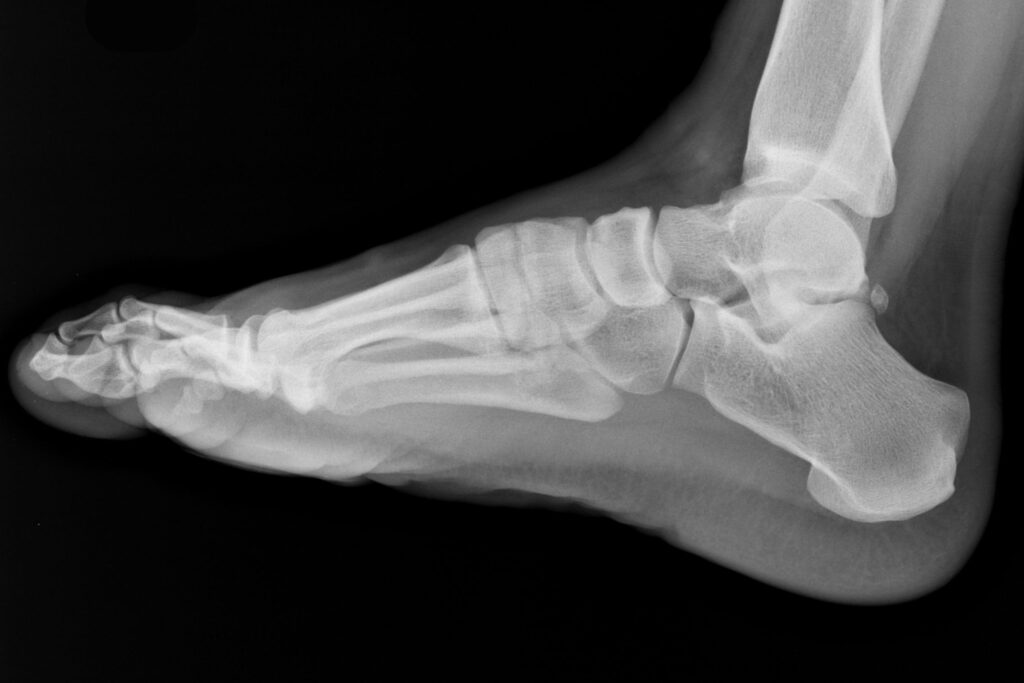
Ankle sprains often catch us by surprise! It could be as intense as landing on an opponents foot after dunking in a basketball game OR as unexpected as having your toe clip a curb carrying groceries to the car… regardless of the cause, ankle sprains are never fun. Navigating life after a sprain can look different for everyone depending on the degree of injury. Understanding how severe the sprain is will enable you to take the best steps forward on your road to recovery!
Ligaments: What Have I hurt?
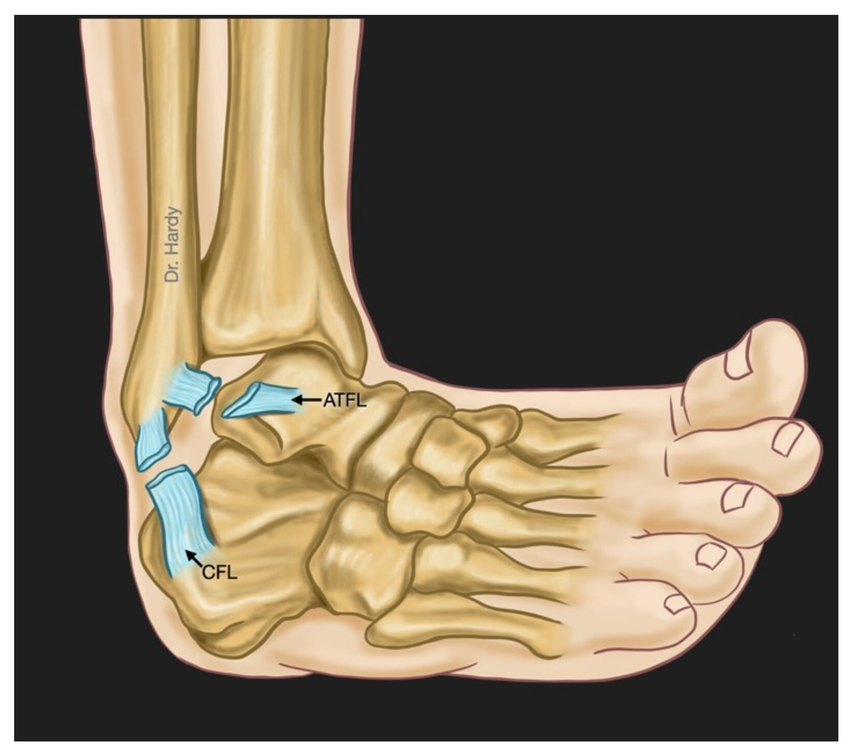
There are two common ligaments in the ankle that tend to get injured during a sprain. The first is your ATFL ligament which stands for your “Anterior Talofibular Ligament“. In short, it connects a bone in your foot called your talus to one of the bones in your leg called your fibula.
The second is your CFL ligament which stands for your “Calcaneofibular Ligament“. It connects your calcaneus, or what many would associate with your “heel” to that same bone mentioned before, the fibula.
Now that you can picture those two ligaments (see image to the left), lets chat about their purpose and why they, specifically, are most commonly injured during an ankle sprain.
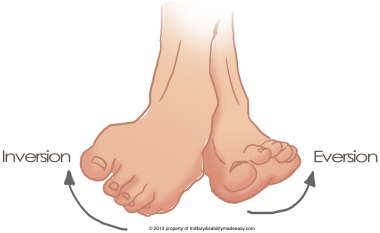
There are two directions your ankle typically sprains. One is called an inversion sprain, the other is called an eversion sprain. Before you get scared away by the vocabulary, here is a good way to remember it:
IN-version is when your foot sprains IN-wards. On the other hand, E-version is when your foot sprains away or is EX-iting away from your body!
Inversion sprains are FAR more common than eversion sprains. This is due to the anatomy of the ligaments on either side of the ankle. The inside of your ankle, or what we would refer to as the medial side, has a strong “fan like” ligament known as the deltoid ligament.
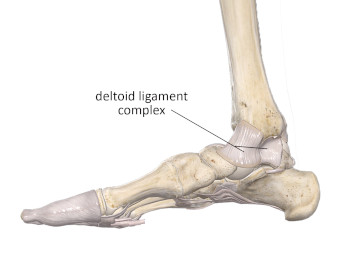
The deltoid ligament is far stronger than the ligaments discussed previously (CFL and ATFL) and therefore if a sprain occurs, the weaker side typically gives in.
With that being said, BECAUSE they are less common, if an eversion sprain does occur they are often far more severe! Injuring the deltoid ligament typically involves a high impact event with extreme force applied to the joint. This often, unfortunately, leads to longer recovery time.
How Bad is It?
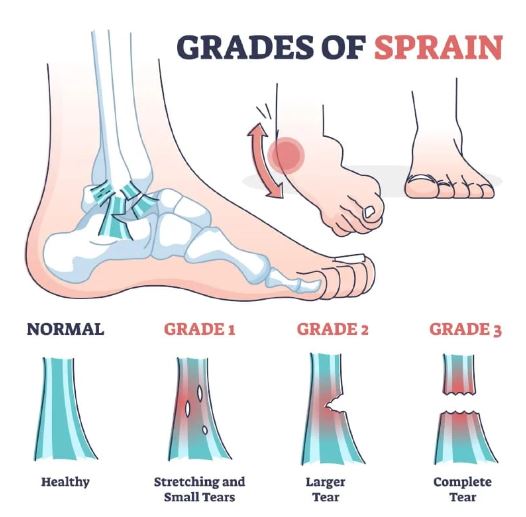
Ankle sprains are the most common single type of acute sport trauma, however the severity of them varies. There are different classifications we use to determine “how bad” the sprain is. Have a look at these brief descriptions below:
- Grade 1 – Mild: May notice swelling and tenderness over ligament however no bruising should be visible. Loss of function is mild or very minimal. Recovery time can range from 2-14 days.
- Grade 2 – Moderate: Bruising is visible on one side of the ankle with mild to moderate swelling present (sometimes called golf-ball swelling). The scale of injury could include partial or complete tear of the ligament. An obvious limp would be present as well as the inability to hop or run. Functional recovery can take up to 2 months (14-40 days).
- Grade 3 – Severe: Severe bruising on both sides of the ankle. It becomes difficult to visualize the Achilles Tendon due to swelling. Complete tearing of the ligament(s) – sometimes multiple. Unable to bear weight and almost full loss of Range of Motion (ROM). Recovery time can take 1-3 months (potentially up to 6 months).
Ankle Recovery: What Now?
Statistics suggest that 25,000 individuals will sprain their ankle…daily! If you’ve joined that group, it’s important you take the right steps towards recovery. Ankle injuries are one of the most common untreated injuries. In other words, people are hurting themselves but often underestimate the severity of the injury to the affected ligament. While it’s possible to identify the intensity of the pain as well as bruising or swelling, having a health care professional give an appropriate diagnosis is strongly advised. Nearly all isolated low ankle sprains can be treated without surgery!

Life becomes frustrating when we have to tackle change! Given our feet are our foundation, the pain and discomfort an ankle sprain can cause seeps into everyday tasks. Getting back on track as fast as possible is ideal AND very attainable!
It’s tempting to rush back into the regular flow of life, BUT be conscious of your injury and seek out treatment if there is consistent pain present. Physiotherapy is a non-invasive, drug-free solution for ankle pain relief! Not only will it help you recover your mobility, but it will also strengthen the muscles preventing further or future injury.
Get A Head Start!
It’s no secret once a ligament has been injured it will always be more susceptible to reinjury. Strengthening is, therefore, a very important aspect of setting yourself up for good recovery! Check out this video below for a few awesome exercises to get working on your ankle! Keep in mind, it’s important you don’t put too much stress on the injury until you have been cleared to do so by a medical professional:
Be patient with yourself. Ankle injuries can be difficult to navigate but you can do it! By taking the proper (careful) steps forward – literally and figuratively – you can triumph over your ankle twist! Ankle sprains can be painful and disruptive, but prompt treatment is key to a swift recovery. Don’t let an ankle sprain hold you back— request your appointment today and take the first step towards healing!
FAQs
Follow the R.I.C.E. method: Rest, Ice, Compression, and Elevation.
You should see a doctor if you experience severe pain, swelling, inability to move the ankle, or if the pain doesn’t improve after a few days.
Healing time varies: sprains may take a few weeks, while fractures can take several weeks to months, depending on severity. Use the “grading” of an ankle sprain above in order to “self-diagnose” BUT ensure you check in with a medical professional to get a proper diagnosis and time for healing!
Symptoms may include pain, swelling, bruising, difficulty walking, and limited range of motion.
Treatment may include R.I.C.E., over-the-counter pain relievers, physical therapy, and, in severe cases, surgery.