
Stay Safe on the Trails: Easy Tips to Prevent Hiking Injuries
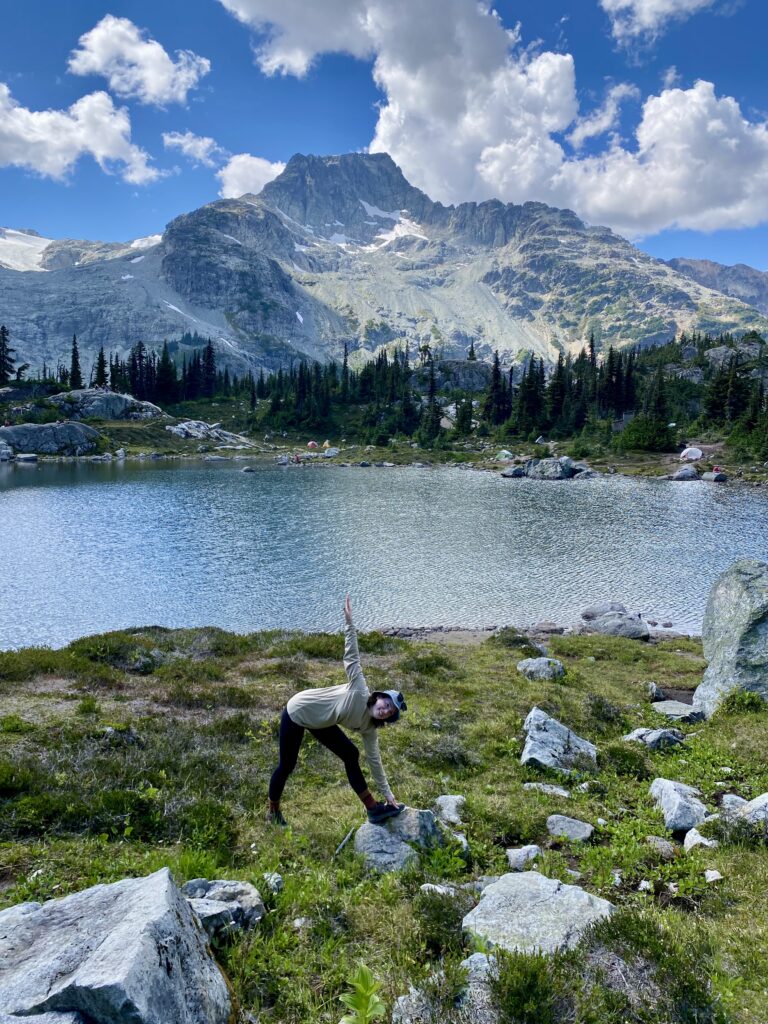
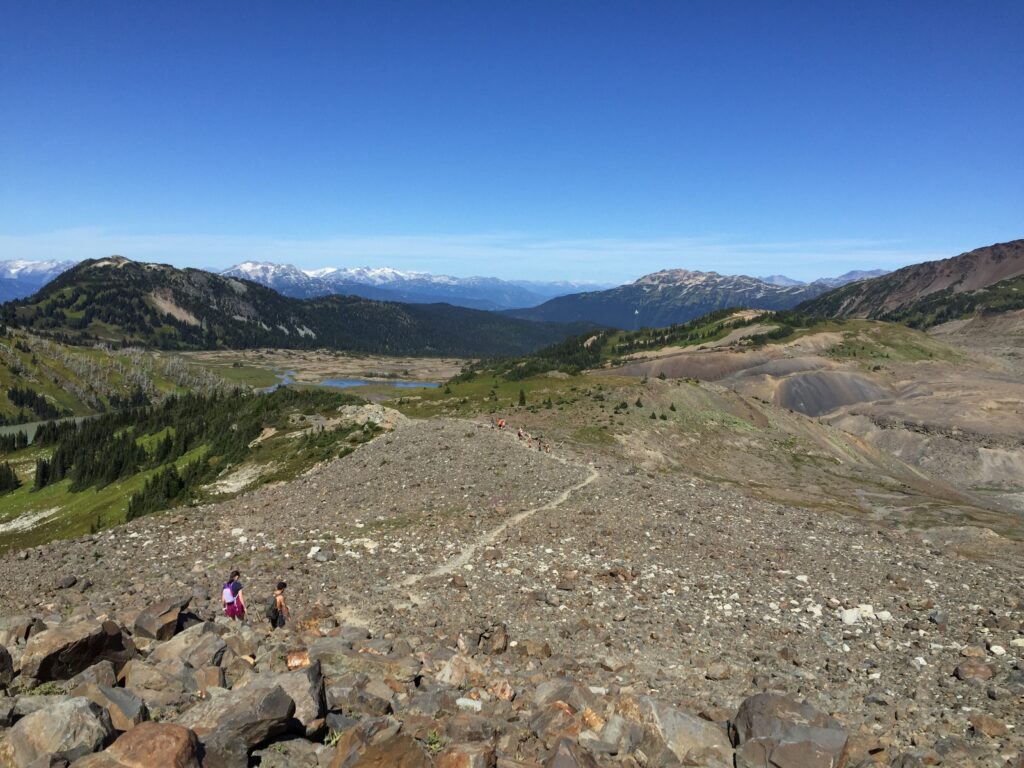
Hike smart and prevent hiking injuries on the trails you love!
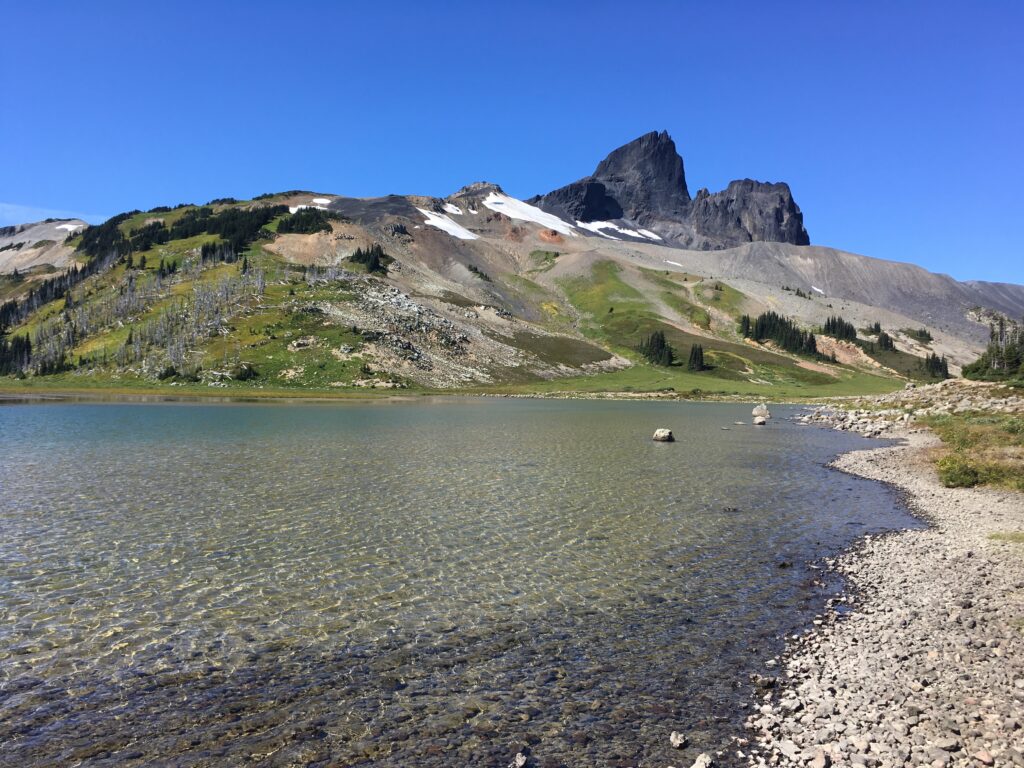
Vancouver has some of the best hiking in the world! From quiet forest paths to mountain trails with stunning views. Getting outside is a great way to move your body, clear your mind and enjoy our beautiful backyard. While hiking is usually a safe and healthy activity, it can sometimes lead to sore muscles, tired joints, or injuries.
The good news? A few simple habits can help prevent hiking injuries; and if you ever do feel pain or want extra support, physiotherapy can help you stay strong, recover well, and keep enjoying the trails.
1. Warm Up Before You Head Out
Even if you’re just going for a short hike, warming up helps your body get ready. Warming up gently before a hike helps improve blood flow, makes muscles more elastic, and increases joint lubrication so your body can move smoothly and safely, all of which can help prevent hiking injuries (Downtownphysio, PubMed). From a physiotherapy standpoint, warming up also primes your mind and body to respond better to the changing terrain of the trail. By preparing muscles and joints, warm-ups reduce the chances of strains or sprains on steep or uneven trails, a simple way to help prevent hiking injuries.
Try this quick warm-up created by Chase Mountains:
- Neck rotations, 5 each direction
- Tornado twists, 10 on each side
- 10 gentle squats
- 5 reps of Air Deadlifts
- Leg swings forward and back, 10 swings for each leg. Hold a tree for support!
- Quad stretch 30 seconds each side
- Roll your ankles and shoulders out
- And finally, shake out your body and start your hike!
It only takes a few minutes, but your body will thank you later!
2. Stretch After You Hike
Stretching after a hike helps relax tight muscles, especially in the calves, thighs, hips, and lower back. Stretching reduces stiffness and helps prevent hiking injuries (Stretching Guide for Backpackers, Trek Digest). Physiotherapists recommend holding stretches gently (without bouncing) for about 20–30 seconds while muscles are warm. Including post-hike static stretches is a low-effort, high-impact way to prevent hiking injuries and support your body in staying trail-ready.
Here are some good spots to stretch:
- Calves – Calf Stretch
- Thighs (front and back) – Quad Stretch
- Hips – 15 Hip Stretches
- Lower back – Seated Hamstring Stretch
Hold each stretch for at least 30 seconds. Don’t bounce, just breathe and relax into it.
3. Be Smart on the Trail
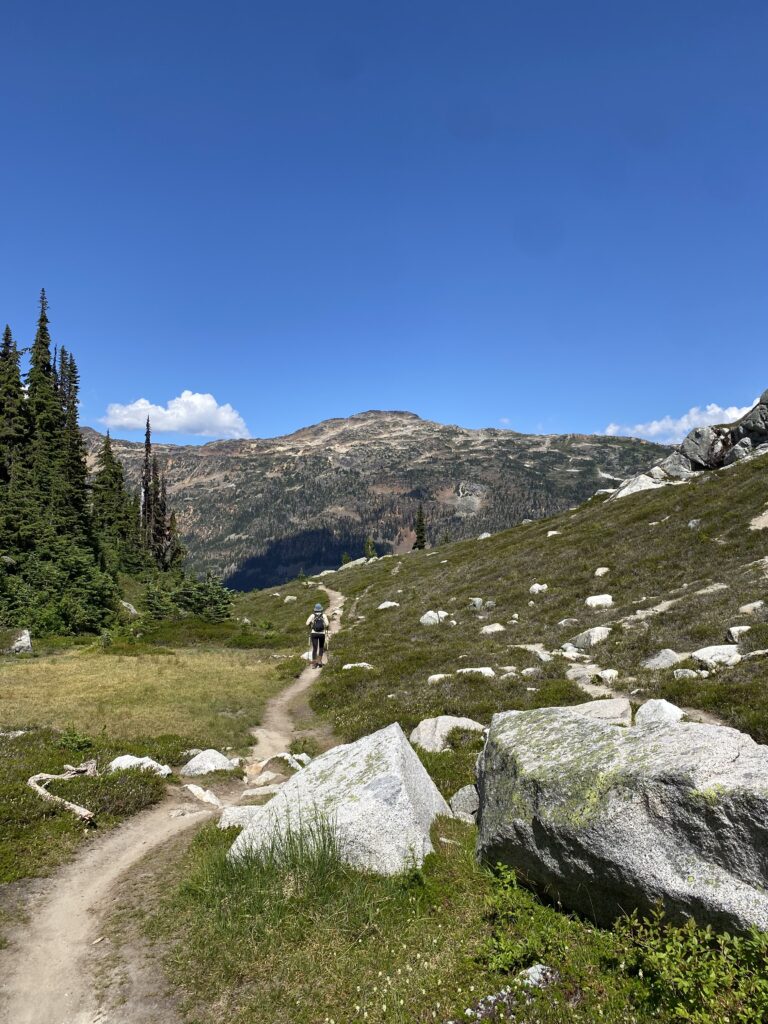
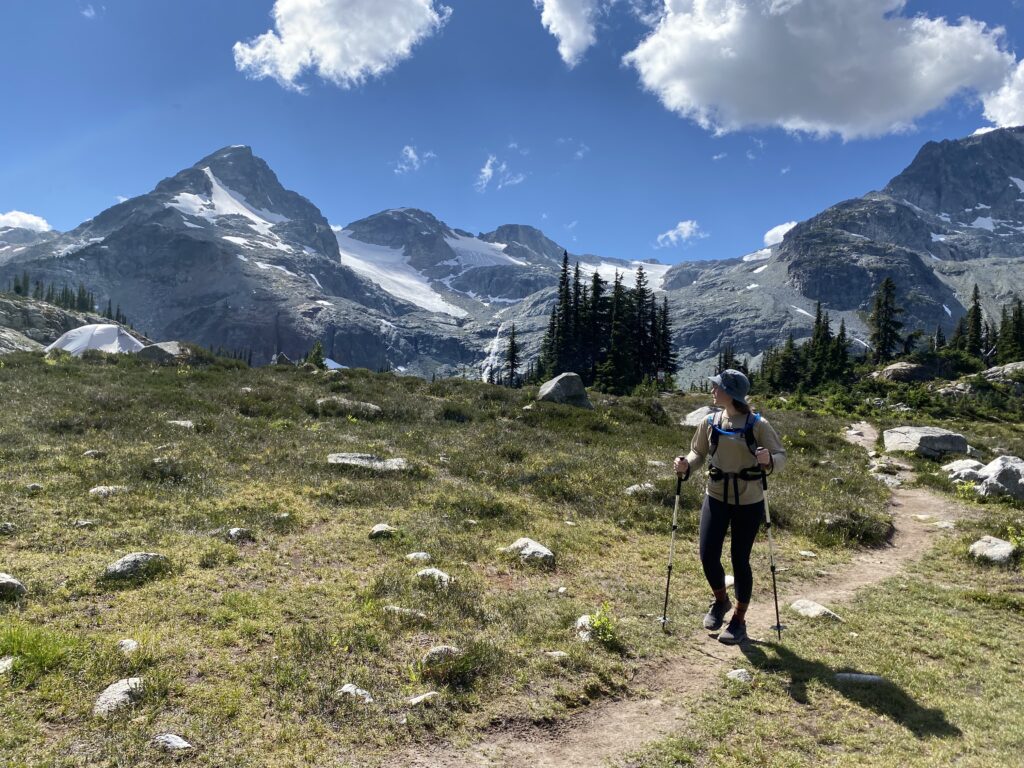
Being mindful of how you walk: take smaller steps uphill, keep your knees slightly bent downhill, and avoid locking joints. All of this helps reduce strain on muscles and joints, which supports efforts to prevent hiking injuries. Using hiking poles also helps distribute load, decrease ground reaction forces, and improve stability, all of which lower injury risk (Verywell Health, PubMedMDPI). By combining good step technique with support tools like poles, you give your body the best chance to stay safe and prevent hiking injuries.
- Take smaller steps going up
- Bend your knees slightly when going down
- Try not to lock your knees straight
- Use hiking poles to help with balance and to take pressure off your knees and back
4. Wear the Right Gear
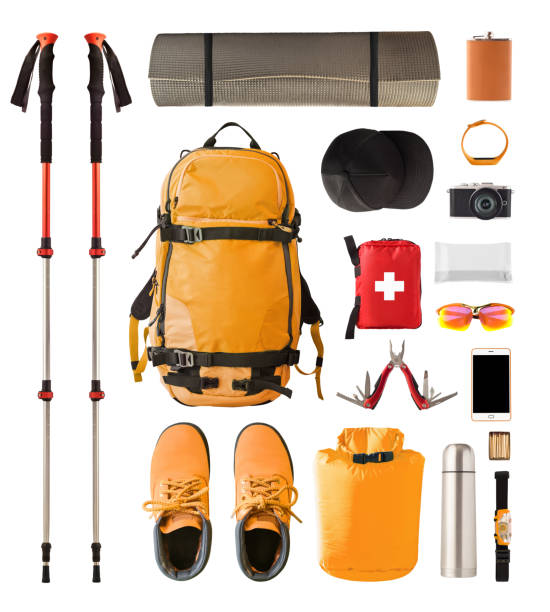
Having the right gear makes a big difference in how you feel during and after a hike:
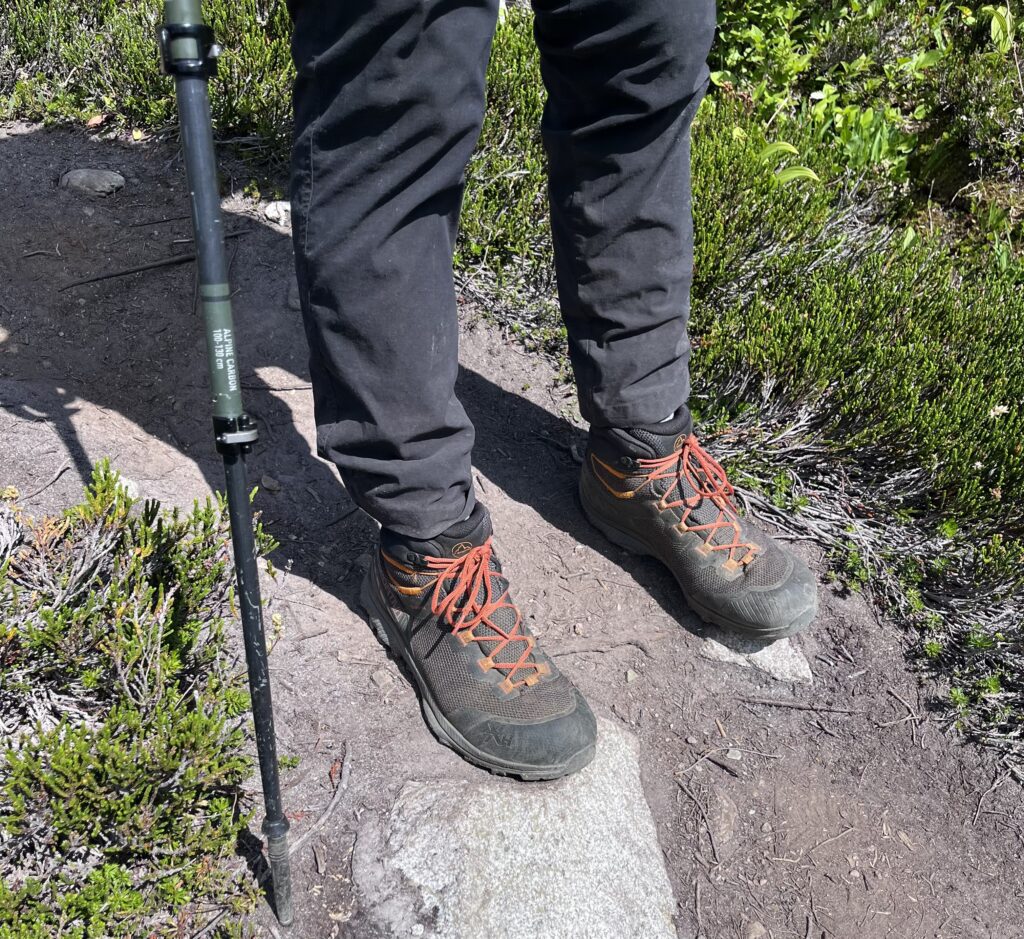
- Good quality and well fitting hiking shoes or boots protect your feet and ankles. If hiking in rainy weather waterproof hiking shoes or gaiters can keep your feet dry and comfortable.
- Backpacks should fit well and not pull on your shoulders. The majority of the weight from your pack should be on your hips. See this video by REI on how to properly fit a large hiking backpack.
- Dress for the weather and bring layers! Having multiples layers (E.g., shirt, sun shirt, sweater, rain shell, thin puffer) means you can adjust your outfit to the changing weather. This is especially important in you will be changing elevation or camping overnight.
5. Take Breaks and Listen to Your Body
Taking regular breaks for water, snacks, and light movement or stretching gives your muscles a chance to recover mid-hike and helps you prevent hiking injuries by avoiding overuse and fatigue. If your body feels tight or tired, resting and not just ‘pushing through’, can prevent small aches from becoming serious issues. Physiotherapists stress the importance of tuning into your body’s signals; early rest and self-care are key strategies to stay safe on the trail. With this habit, you can reduce your risk and actively prevent hiking injuries by respecting your body’s limits.
If something starts to ache or feel tight, take a break. It’s better to rest for a minute than to push through and risk injury.
Other helpful tips:
- Drink water often
- Eat snacks to keep your energy up
- Stretch during your breaks if you feel stiff
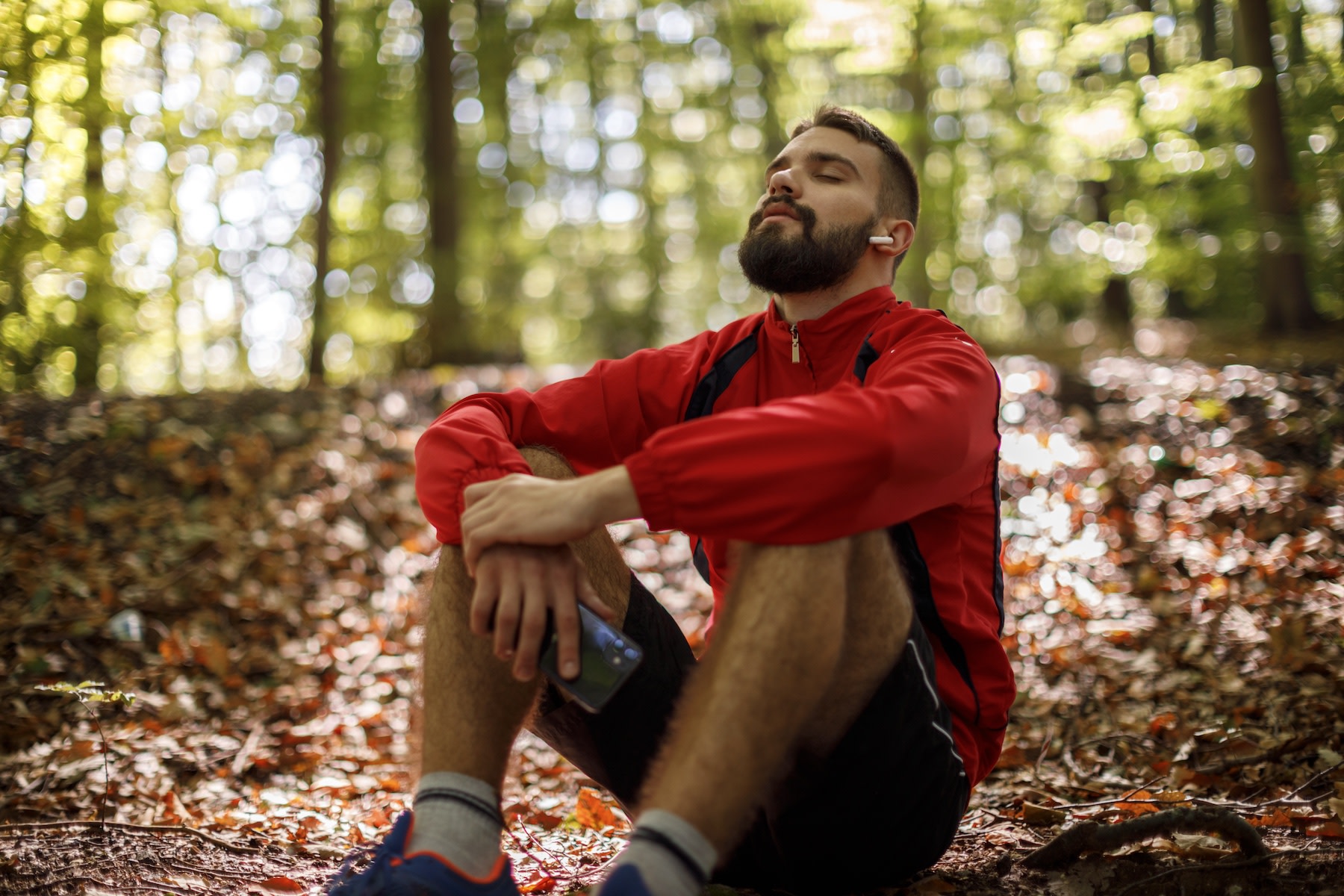
6. Common Hiking Injuries Physiotherapy Can Help With
Through targeted treatment, such as manual therapy, strength exercises, and flexibility work, physios support healing and build resilience. They also teach safer movement habits, reducing the risk of re-injury. Identifying and treating these common concerns with a physiotherapist not only helps recovery but also helps you prevent hiking injuries in the future.
Even if you do everything right, aches or injuries can still happen. The good news is, physio can help with many of them. Some common hiking injuries include:
- Knee pain (especially from going downhill)
- Ankle sprains from stepping on uneven ground
- Hip or low back pain from carrying a heavy backpack
- Foot pain or plantar fasciitis from long hikes
- Muscle strains from overdoing it or poor form
A physiotherapist can help you:
- Heal from the injury
- Reduce pain and swelling
- Regain strength and balance
- Learn how to move in safer ways next time
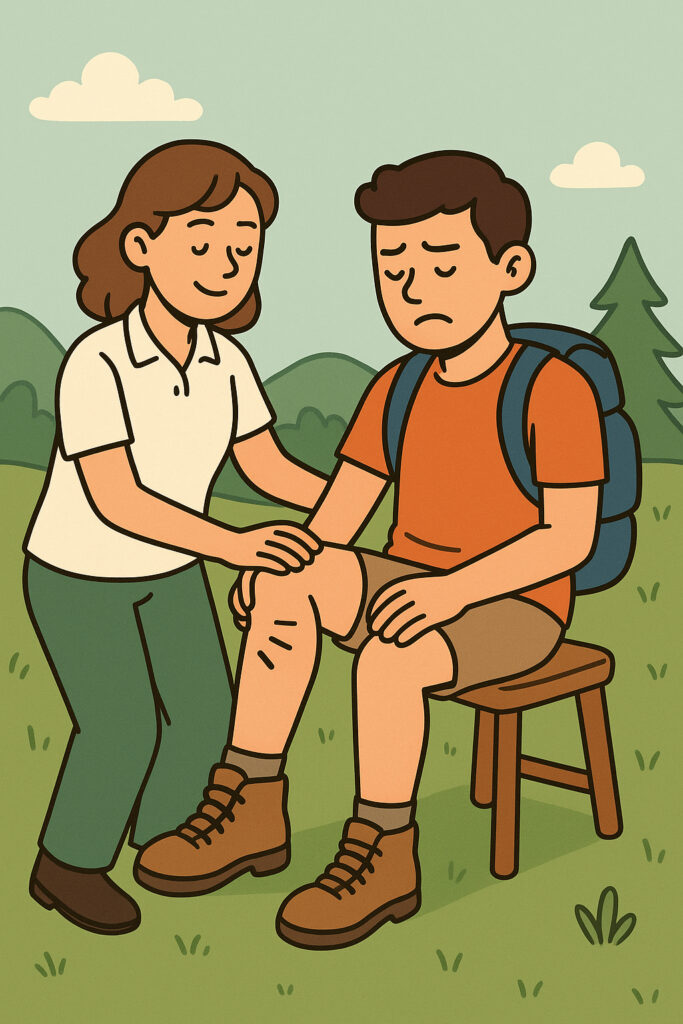
7. How Physio Keeps You Strong on the Trails
Physiotherapy isn’t just for when you’re hurt, it’s a powerful way to prevent hiking injuries by building strength, balance, and good movement patterns. A physio can design exercises that target weak or tight areas like your core, hips, and legs, helping to improve posture and stability on varied terrain. They also teach tailored warm-up routines and advice on gear and techniques that fit your body. With even a few sessions, physiotherapy can equip you to stay stronger and avoid injuries, making it easier to keep enjoying hiking safely.
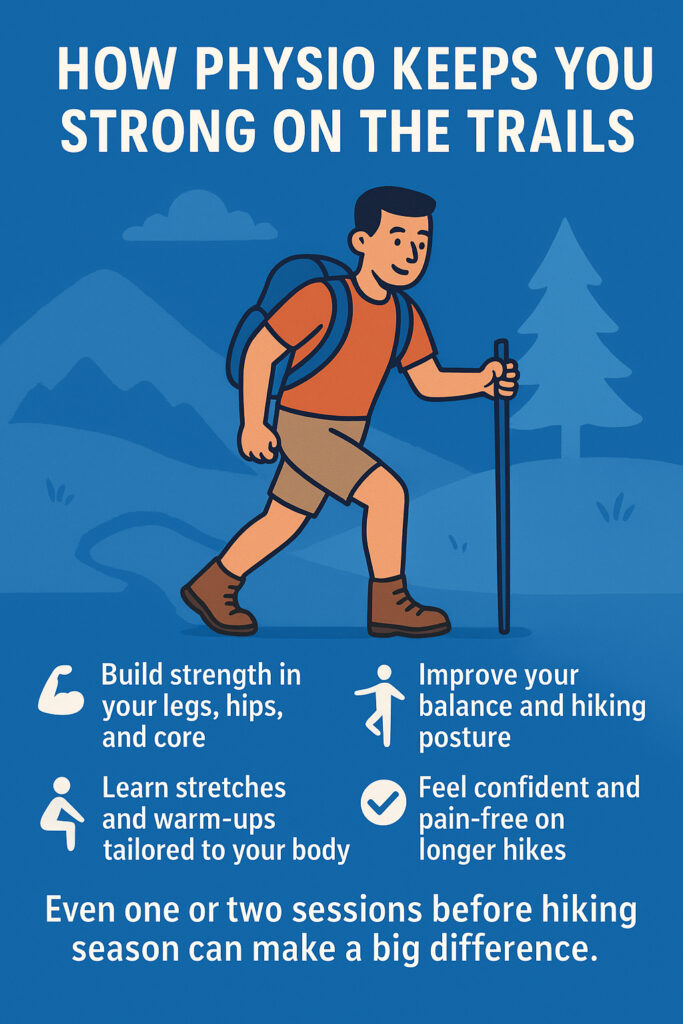
Physiotherapy isn’t just for recovery. It can help you:
- Build strength in your legs, hips, and core
- Improve your balance and hiking posture
- Learn stretches and warm-ups tailored to your body
- Feel confident and pain-free on longer hikes
Even one or two sessions before hiking season can make a big difference!
Explore with Confidence
Vancouver’s beautiful trails are meant to be enjoyed—and you don’t need to be in pain to do it. With a few simple habits and support from a physiotherapist when you need it, you can hike smarter, feel stronger, and stay out there longer.
Want help getting trail-ready, or recovering from a hiking injury? Book an appointment today. We’ll help you move better, feel better, and enjoy the adventure.
FAQs
Start with regular walking, light cardio, and strengthening exercises a few weeks before you hit the trails. Building endurance and leg strength is one of the best ways to prevent hiking injuries, especially on steeper or longer routes in our beautiful local mountains.
Mild muscle soreness (DOMS) is normal and usually fades within 24–72 hours. If pain is sharp, swelling develops, or soreness doesn’t improve after a few days, it may be an injury rather than normal recovery. Seeing a physiotherapist can help you prevent hiking injuries from becoming long-term problems.
Absolutely. Many hikers see physiotherapists for preventative care, including strength programs, mobility work, and advice on safe hiking techniques. This proactive approach helps prevent hiking injuries and keeps you feeling confident on the trails.
It’s best to book an appointment within a few days of noticing pain, swelling, or limited movement. Early treatment not only speeds up recovery but also helps prevent hiking injuries from worsening or coming back in the future.
Good footwear is key to preventing hiking injuries. Look for shoes or boots with strong tread for grip on wet rocks and roots, cushioning for longer hikes, and ankle support for uneven ground. Waterproof options are especially helpful for Vancouver’s rainy trails, although for multi day hikes many hikers prefer non-waterproof shoes as they dry faster if they get soaked. Visit this Hiking Shoe Guide from REI for more information!